Overview
In an earlier CRM analysis, the work followed a familiar pattern: clean the data, write queries, build charts, interpret results, and package the findings into a static article. That process produced useful insights, but it was still analyst-driven. Stakeholders had to wait for questions to be translated into SQL, visuals, and written takeaways before they could act on the data.
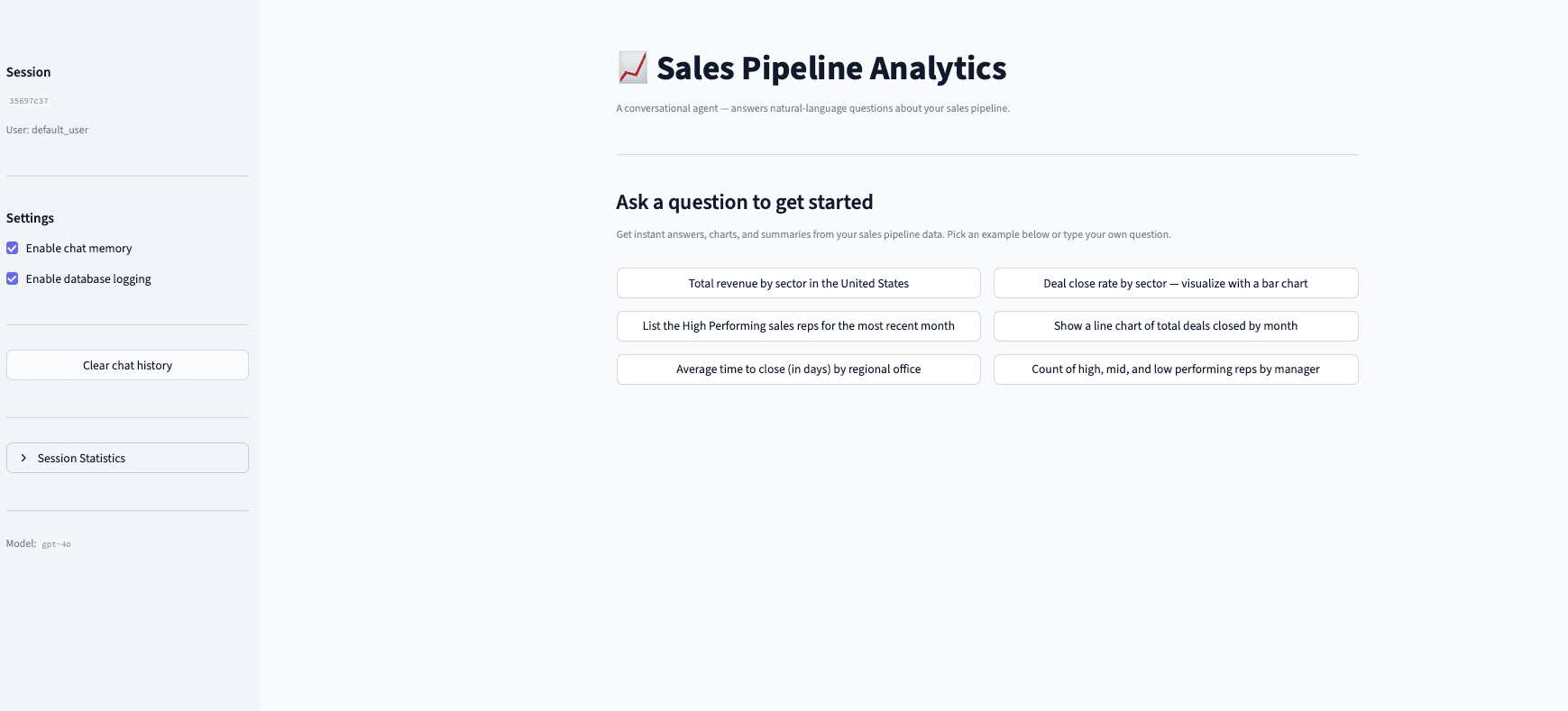
This project shows a more scalable approach. The Sales Pipeline Analytics AI Assistant lets users ask plain-English questions about pipeline performance and receive a chart, table, and short summary in response. Instead of relying on a fixed set of dashboards or a one-time write-up, stakeholders can probe the data directly, ask follow-up questions, and refine their analysis in real time.
The system's value comes from how it applies AI responsibly. The assistant routes requests through a structured workflow, generates SELECT-only SQL, reuses prior results for follow-ups, and renders charts through controlled logic rather than free-form code execution. This keeps the experience flexible for users while preserving reliability.
The result is a practical example of AI enablement. It moves analytics from a manual reporting exercise to an accessible decision-support tool that helps teams explore revenue, sectors, sales performance, and trends on demand.