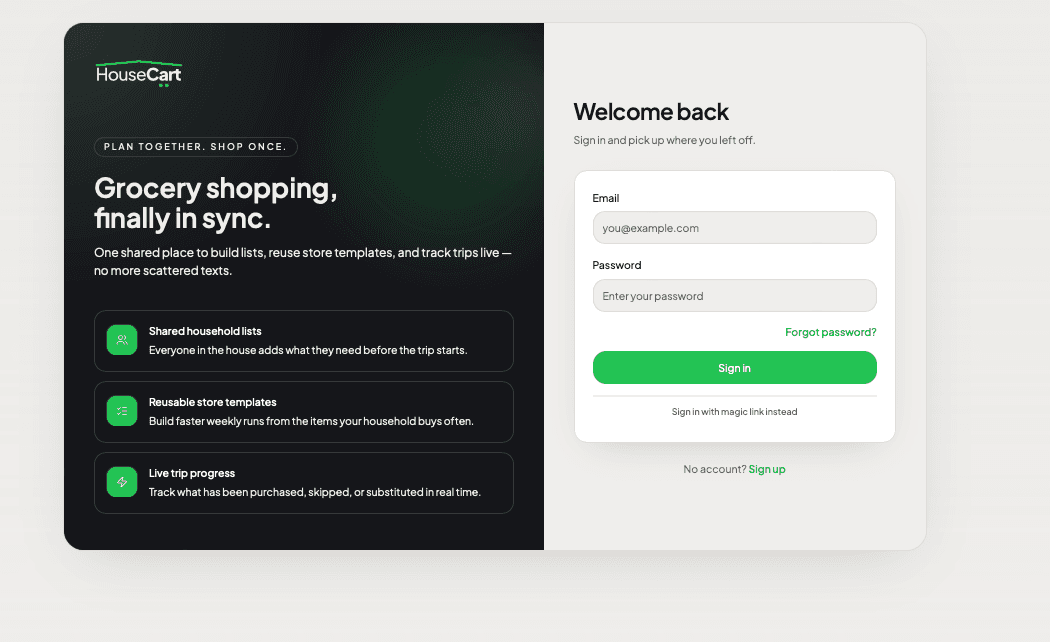
The Problem
Grocery shopping for a household isn't one task, it's a coordination problem that most families run entirely on memory and group texts.
- It's spread across multiple stores. Costco for bulk, Whole Foods for produce, Wegmans for other household goods, each with its own mental list.
- Nobody can remember what comes from where. "Did we get paper towels at Costco or Target? Are we out of olive oil?" The knowledge lives in one person's head.
- Every trip starts from scratch. The same staples get re-typed into a notes app week after week, and things still get forgotten.
- Handoffs break down. When a different family member shops, they don't know the usual brands, quantities, or what's already covered, so items get doubled up or missed.
The result is duplicate purchases, forgotten essentials, and one person quietly carrying all the mental overhead.
The Solution
HouseCart gives a household a single, structured place to run their shopping, built around a simple idea: maintain it once, reuse it forever.
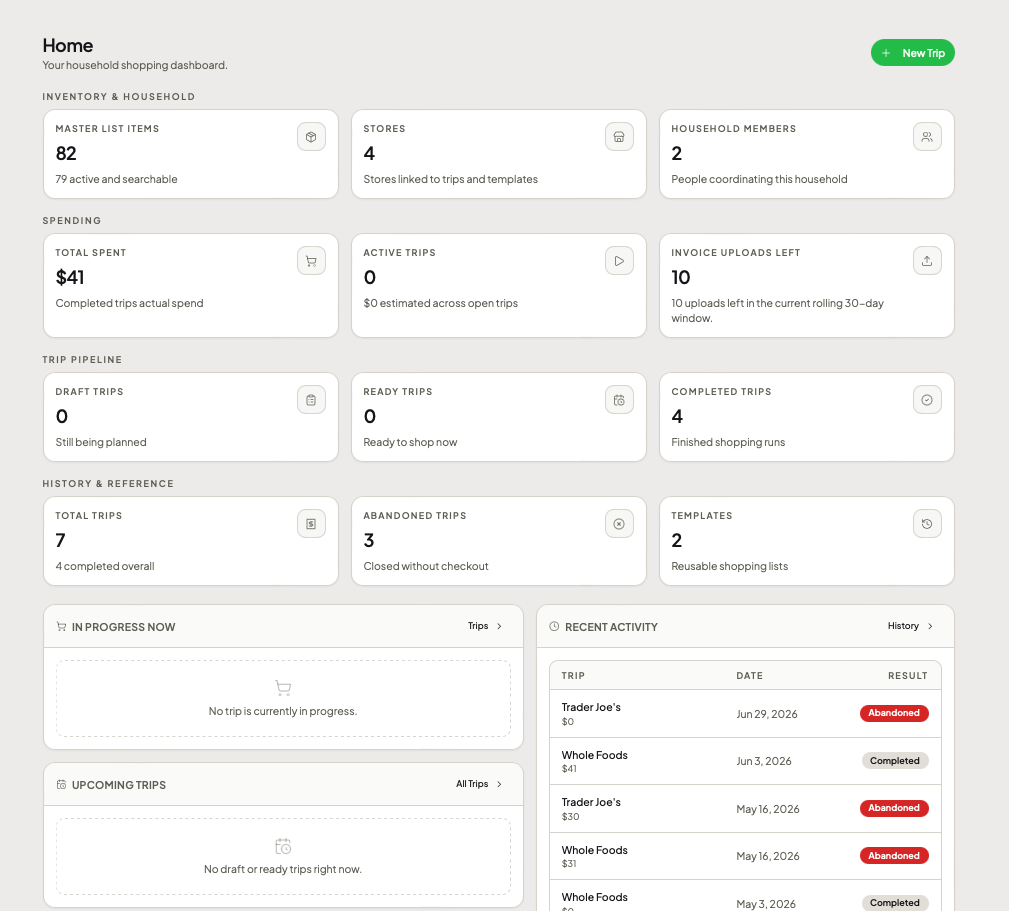
It's organized as a three-tier workflow:
1. Master List: the household's living catalog of everything they buy, tagged by store, category, brand, size, and estimated price. This is the source of truth that solves "what do we buy, and where does it come from?"
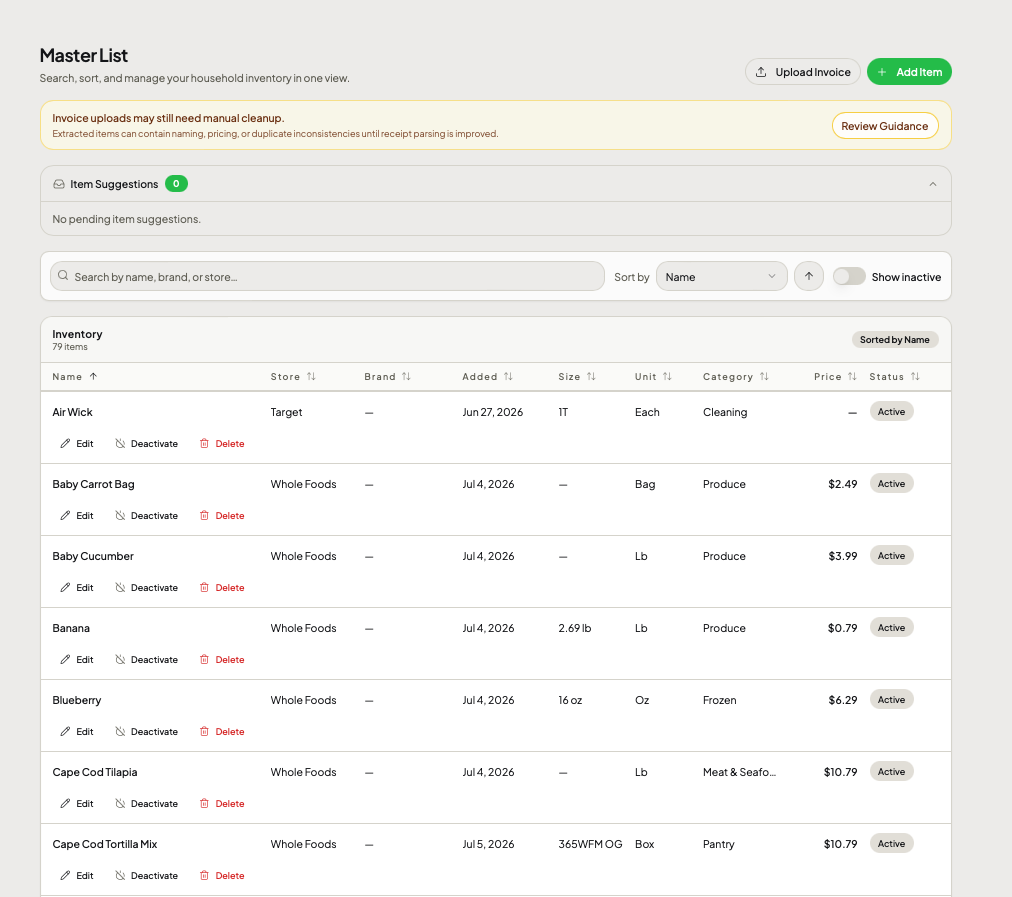
2. Store Templates: reusable, per-store shopping lists (e.g. a "Costco weekly" template) built from the master list. No more rewriting the same list every week.
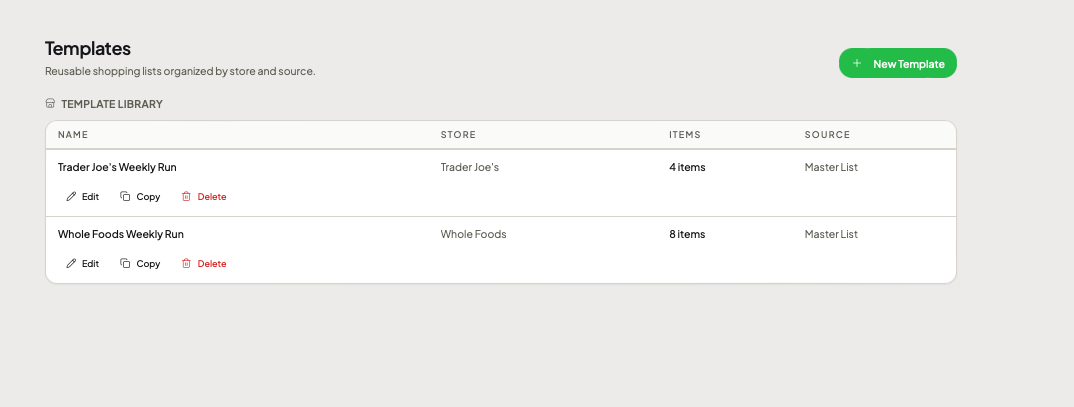
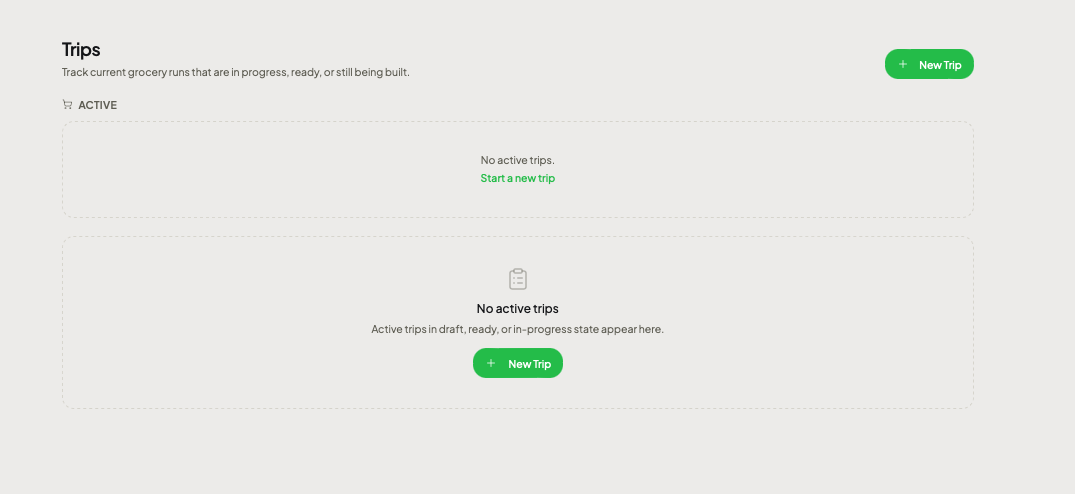
3. Trips: a shopper spins up a live trip from a template, then works through it in-store, marking items purchased, out of stock, or substituted, with a running cost tally as they go.
Around that core, HouseCart handles the coordination layer that group texts can't:
- Roles for how families actually operate: admins maintain the catalog and templates; shoppers run trips; contributors can add items or suggest new ones; everyone can see what's happening.
- An item-suggestion queue so anyone can propose a new item without cluttering the master list, the admin reviews and promotes it.
- Live trip visibility so the household sees an active trip in progress, can comment ("grab extra milk while you're there"), and gets notified as it moves along.
- Trip history and price memory so estimates stay realistic and the household gets smarter about what it actually buys over time.
Because the master list carries estimated prices, families also get a rough cost preview before anyone leaves the house, and a real running total while shopping.
Built With AI
HouseCart was designed and built by pairing with AI coding tools (Claude and Codex), from turning a rough problem statement into a structured PRD, through implementation, to iterating on real usage. It's a responsive web app on React + TypeScript, backed by Supabase (Postgres, auth, and row-level security so each household's data is fully isolated), and deployed on Vercel.
Early Release Testing
Signup is currently gated while I finish testing. If you're interested in an early account, send me an email.